ADU Rules Outside Seattle: Snohomish & King County
By Eric Dexter, Owner & Builder ·
Nearly every ADU guide online is written for Seattle city limits. If your lot is in Monroe, Bothell, Everett, Woodinville, Kenmore or anywhere in unincorporated county, that guide describes a code that does not govern your build.
We're headquartered in Monroe and build across both King and Snohomish County, so this is the question we field most often from homeowners outside the city. Here's what's shared across Washington, what changes at every jurisdiction line, and the two site conditions that decide rural projects.
The statewide floor
Washington's 2023 ADU reform legislation set a baseline that cities and counties planning under the Growth Management Act have to meet. In broad strokes it requires them to allow up to two ADUs per residential lot, removes owner-occupancy requirements, limits parking mandates near frequent transit, requires that units of roughly 1,000 sq ft be permitted, and caps impact fees relative to a single-family home. We cover it in detail in Washington's ADU laws.
Two things about that floor matter enormously outside Seattle. First, it is a floor, not a ceiling — jurisdictions can be more permissive, and many layer their own design, height and lot-coverage standards on top. Second, and more consequentially: the requirements are aimed at urban growth areas. Rural land outside a UGA is a different conversation, and a great deal of Snohomish County is rural land outside a UGA.
What changes at the city line
Even among neighboring cities that all comply with the same state law, the specifics you'll actually design around differ:
- Maximum size, height and number of stories for a detached unit
- Setbacks, lot coverage and the resulting buildable envelope
- Design standards — roof form, siding, entry orientation, window placement
- Whether the unit can be sold separately, and under what conditions
- Impact and connection fees, which vary widely between jurisdictions
- Tree retention and critical-area rules, which can consume a backyard
- How the counter reviews and schedules, which decides your real timeline
That last one is not a code item and it's often the biggest variable. Review queues, submittal formats and inspector expectations differ by office, and knowing them is most of what keeps a project from stalling. Our service-area pages break the cities down individually.
Septic and water: the two rural gatekeepers
On a sewered city lot, utilities are a cost question. On a rural lot they are a yes-or-no question, and they get answered before zoning ever matters.
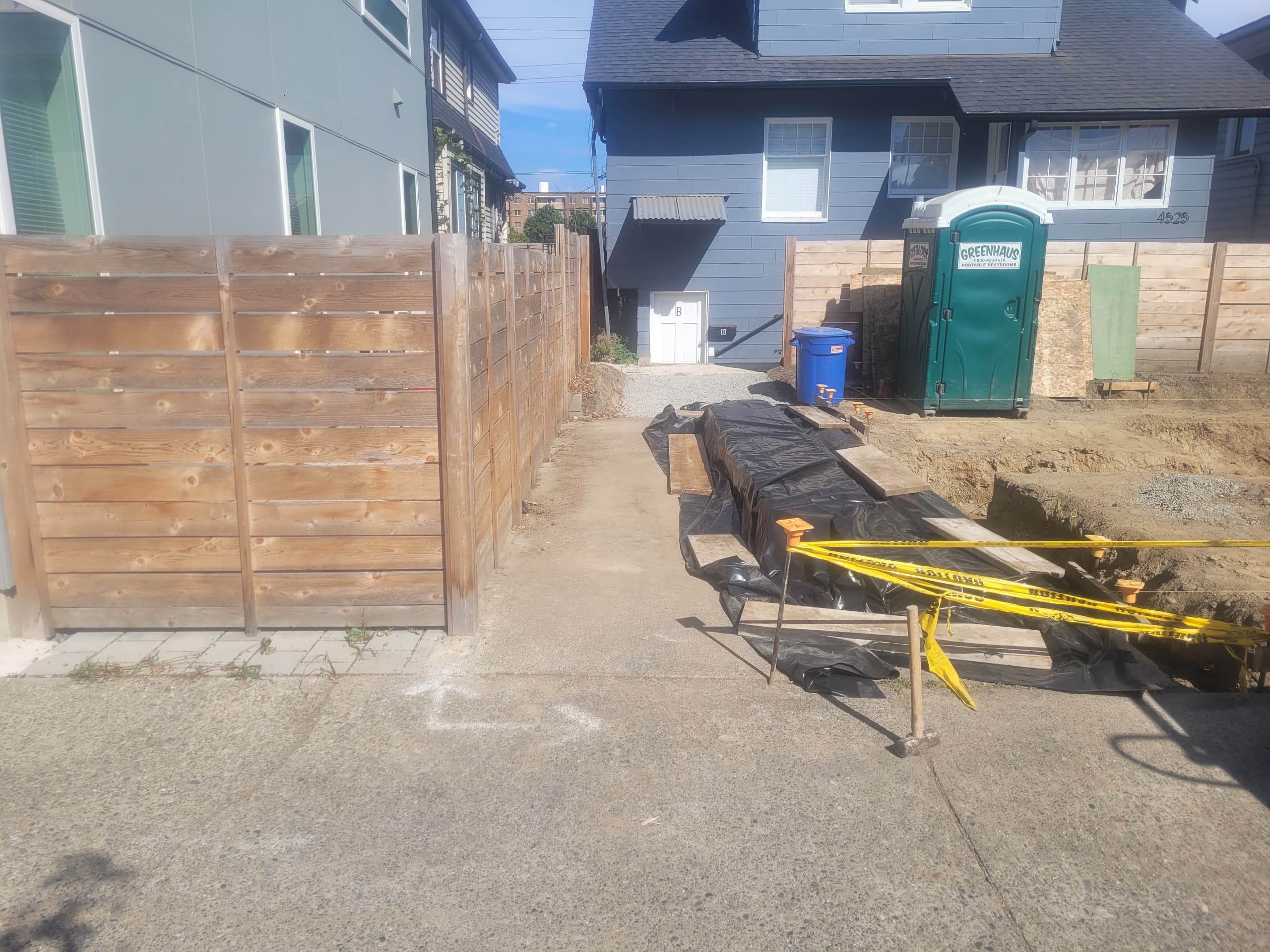
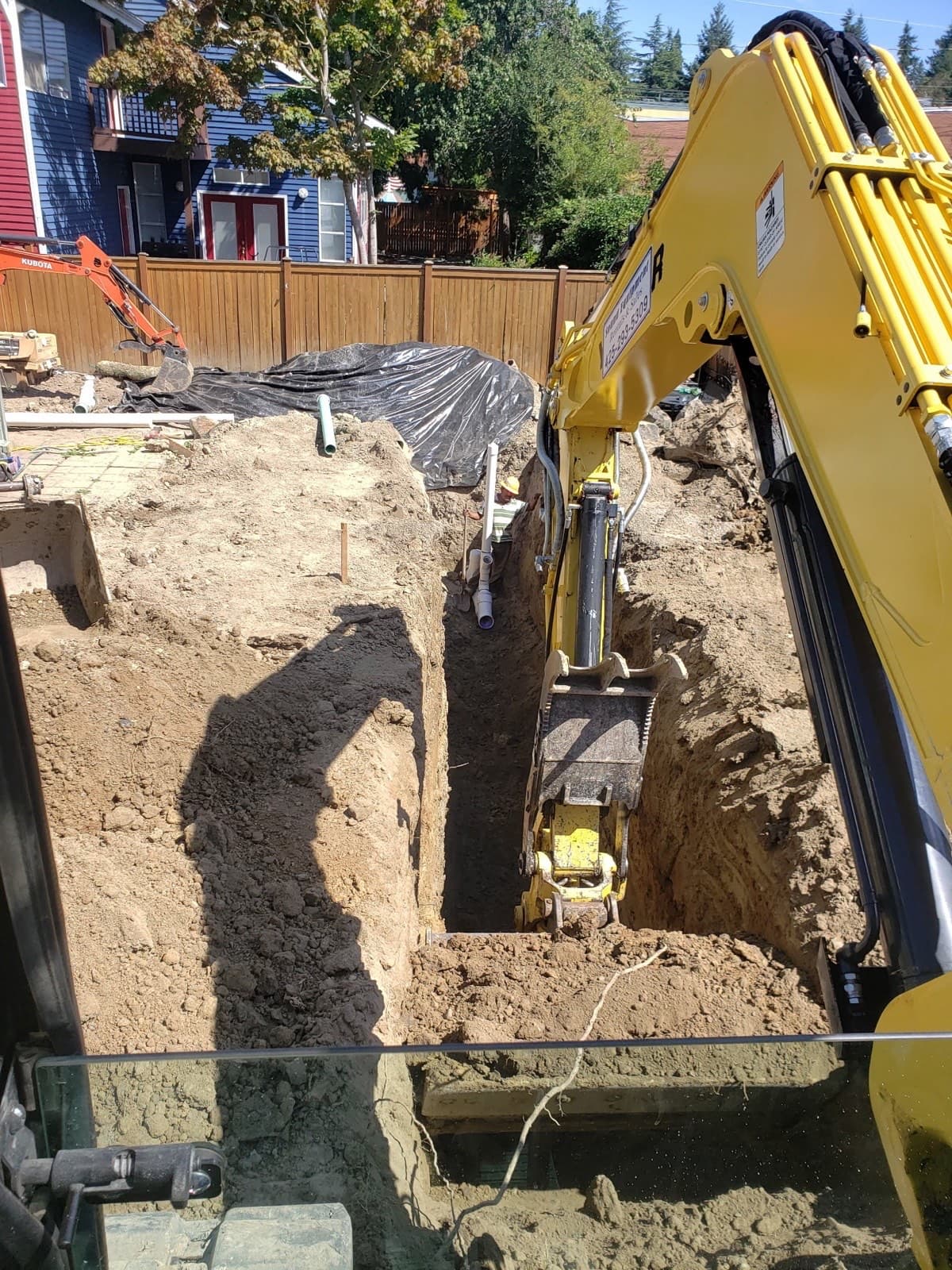
Septic. If the property is on an on-site septic system, adding a second dwelling means the system has to support the additional bedrooms — which usually requires health-district review and may mean expanding the drainfield, or finding that there's no approved reserve area to expand into. A lot can be perfectly zoned for an ADU and still not be able to take one for this reason alone.
Water. Public water is a connection and a fee. A private well or a small shared water system raises questions about capacity and whether the water right covers an additional connection, and those can take real time to resolve.
We sequence both of these first on rural projects, because they're the cheapest problems to discover early and the most expensive to discover late. The city-lot version of this is covered in ADU utility connections.
County vs. city: which office is yours
If your address is inside an incorporated city, that city's code and permit counter govern. If you're in unincorporated King or Snohomish County, the county does — different code, different fees, different inspectors, and in Snohomish County a meaningful chance the parcel is rural rather than urban. Mailing addresses mislead constantly here: plenty of properties with a Monroe or Woodinville address are not in city limits. Parcel lookup settles it, and it should be the first thing anyone checks.
What stays the same everywhere
Building code, energy code and the inspection sequence are statewide, so the construction itself doesn't change much across the metro — see every inspection your build goes through. Costs track the same ranges on realistic costs, with fees and site work as the variables. What changes between jurisdictions is what you're allowed to build and how long approval takes.
Find out what applies to your lot
We're jurisdictional specialists in this metro by necessity — the counters differ enough that you can't treat them as one market. Send us your address through the contact form and we'll tell you which jurisdiction you're in, what it allows, and whether septic or water is going to be the deciding factor. The ADU & DADU FAQ covers the common questions in the meantime.