Does Building an ADU Raise Your Property Taxes?
By Eric Dexter, Owner & Builder ·
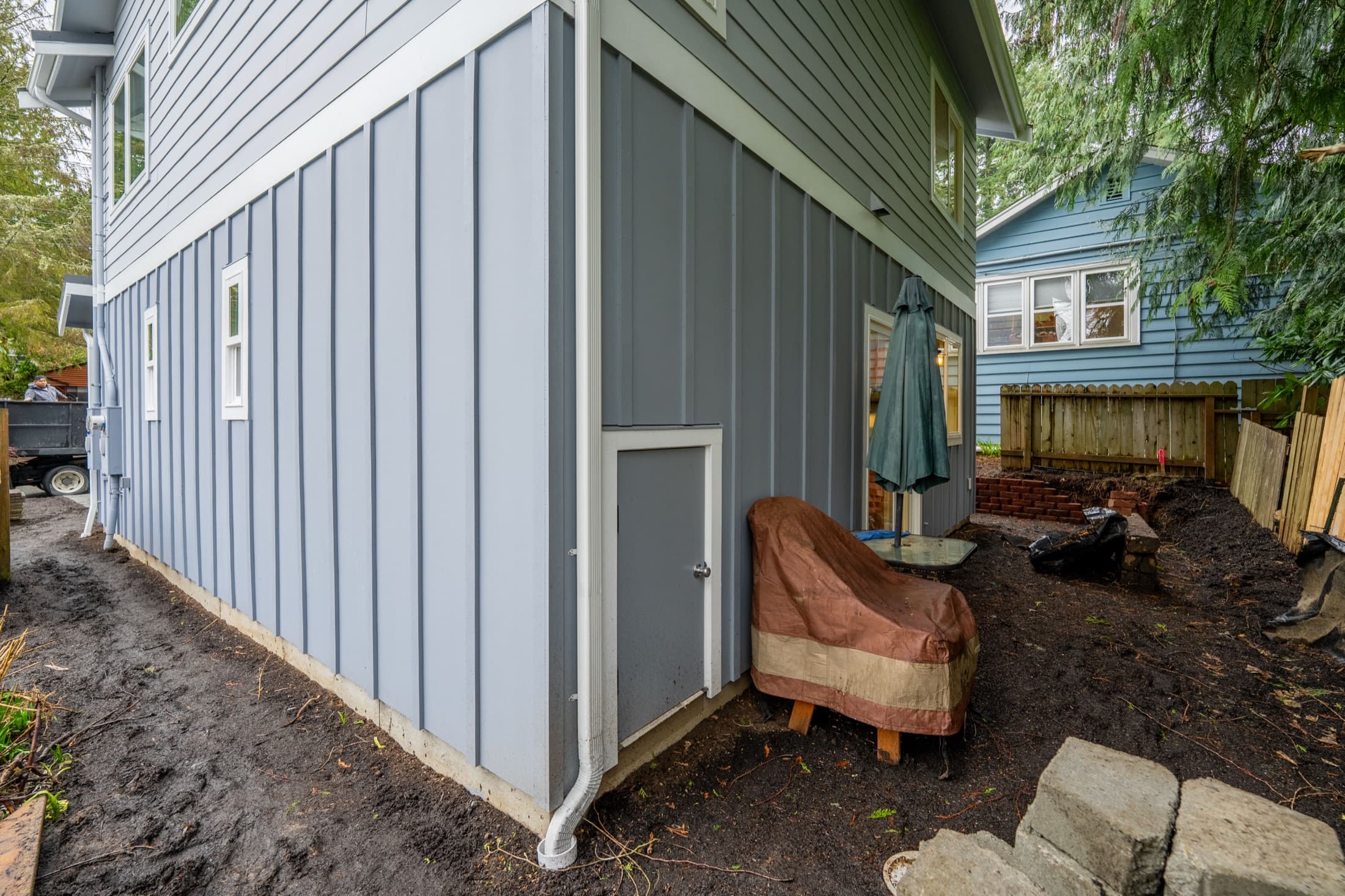
Homeowners who have run the rent numbers and lined up financing almost always arrive at the same last question before they commit: if I add a DADU in the backyard, what happens to my property tax bill?
It's a fair question and a badly answered one online. Here's how Washington actually treats a new accessory dwelling unit, the three-year exemption most homeowners never hear about until it's too late to claim, and the one deadline that disqualifies people every year.
The short answer
Yes — building an ADU adds assessed value to your property, and that generally means a higher tax bill. But two things soften it more than most people expect.
First, Washington's property tax system is budget-based, not rate-based. Taxing districts calculate what they need to collect, then set rates to raise it. As King County puts it, an increase in property value doesn't represent a dollar-for-dollar increase in property taxes — your share of the levy shifts, but the levy itself doesn't grow because your parcel did.
Second, and more usefully: state law offers a physical-improvement exemption that can keep the value of a new ADU off your assessment for three years. It has to be claimed, and it has to be claimed before you finish.
The three-year exemption most homeowners miss
RCW 84.36.400 exempts a physical improvement to a single-family dwelling from property tax for the three assessment years following completion. The statute now explicitly covers constructing an accessory dwelling unit — attached, within, or detached — so a backyard DADU qualifies where it previously took interpretation.
The limits are straightforward:
- The exemption runs for three assessment years after the improvement is complete.
- It is capped at 30% of the value of the original dwelling before the improvement.
- A property can use it once every five years.
- It exempts the improvement’s value — not your existing home, and not the land.
The deadline that disqualifies people
This is the part worth reading twice. You must file the claim before the improvement is complete. King County's guidance is explicit that applications submitted after completion will be denied, and Snohomish County uses the same language. There is no retroactive path. A homeowner who finishes a $300,000 DADU and then asks about the exemption has already lost it.
Timing within the year matters too. In King County, a claim filed by July 31 takes effect for the following tax year; filed after July 31, it applies to the second future tax year instead. If you are planning a build, the claim belongs on your calendar alongside the permit — not in the punch-list phase.
One practical note: some county forms still use older language about attached additions and home improvements, which leads homeowners to assume a detached unit doesn't qualify. Confirm directly with your county assessor before you decide it doesn't apply to you.
Two newer programs worth knowing about
Washington added two ADU-specific property tax provisions recently. Neither is broad, but both matter to the right owner.
The low-income ADU rental exemption
ESB 5529, effective for taxes collected in 2026 and after, allows an exemption on an ADU rented to a low-income tenant. The constraints are tight: it is authorized only in King and Pierce counties (and cities within Pierce), and only where the local jurisdiction has actually adopted it. The ADU's value must be no more than 30% of the original structure's, rent is capped at 30% of the tenant's monthly income, the tenant cannot be an immediate family member under 60, and you refile annually with an income affidavit.
If your lot is in Snohomish County — Monroe, Everett, Bothell, Lynnwood, Snohomish — this program does not reach you. That distinction catches people, because so much ADU coverage is written for Seattle and applied metro-wide. We break the jurisdictional differences down in ADU rules across Snohomish and King County.
Senior, disabled and veteran programs
HB 2375, effective June 2024 and applying to taxes collected from 2025, folds one ADU into the definition of a “residence” for the senior and disabled persons exemption and deferral, the limited-income deferral, and the veterans' widow or widower assistance program. If you already qualify for one of those, adding a single ADU no longer pushes that portion of your property outside the benefit.
The catch is occupancy: these programs require you to occupy the residence more than six months a year. Renting the unit out year-round as a separate tenancy works against that requirement, so an owner relying on a senior exemption should get advice before planning the ADU as a full-time rental. This is one of the few places where how you plan to rent the unit changes the tax answer rather than just the income answer.
How to think about it against the rest of the numbers
In practice, the added tax on a DADU is a real carrying cost but a modest one next to the build cost and the rent. It belongs in the same column as insurance and maintenance — a line that shifts the return, not one that decides it.
The more important planning point is sequencing. The exemption is worth three years of assessed value on the improvement, capped at 30% of your pre-build home value, and it costs nothing but a form filed on time. Homeowners lose it for one reason: nobody told them it existed until the unit was finished.
If you're still working out whether the project pencils, our ADU cost calculator and the investment case for a Seattle ADU cover the revenue side, and financing an ADU covers how owners actually pay for the build. For what you're allowed to build in the first place, start with how big a DADU can be in Seattle.
Confirm your own numbers
Nothing here is tax advice, and assessment practice varies by county. Your assessor's office is the authority on your parcel, and a CPA is the right person to model the bill against your situation.
What we can tell you is what the build itself will cost and what it will add — see realistic costs for current ranges. Send us your address through the contact form and we'll tell you what your lot supports and roughly what the finished unit is worth, which is the number your exemption claim will hinge on.