What Does an ADU General Contractor Actually Do?
By Eric Dexter, Owner & Builder ·
Most people picture a general contractor as the person who builds the thing. On a backyard ADU, the building is the smaller half of the job. The larger half is everything that has to happen in the right order, with the right paperwork, for the building to be legal, finished on time and paid for correctly — and that is what you are actually hiring.
Here is the whole role, phase by phase, so you know what to expect from whoever you hire and what questions to ask when you do.
Before anything is drawn: feasibility
A good GC's involvement starts at your address, not at your drawings. Lot coverage, setbacks, height, tree protection, critical areas, where the sewer and water are, whether a machine can physically reach the backyard. These are the questions that decide whether a project exists, and most of them are builder knowledge. Start with can I build an ADU on my lot.
Design and the permit set
In a design-build arrangement the GC runs this phase directly; with a separate architect, the GC should still be in the room, because the drawings decide the cost. Either way the output is a permit-ready set — site plan, structural calcs, energy-code forms, drainage — and the GC is the one who submits it, tracks it through review, and turns around the City's correction letters. The difference between the two models is in design-build vs. architect plus contractor.
The number, and what it includes
The GC produces the estimate, and the quality of a GC shows in what the estimate contains. Site work, utility runs, permit and impact fees, allowances, exclusions and a contingency should all be visible. A number that leaves them out is not lower; it is incomplete. We go line by line in how to compare ADU bids.
Sequencing a dozen trades
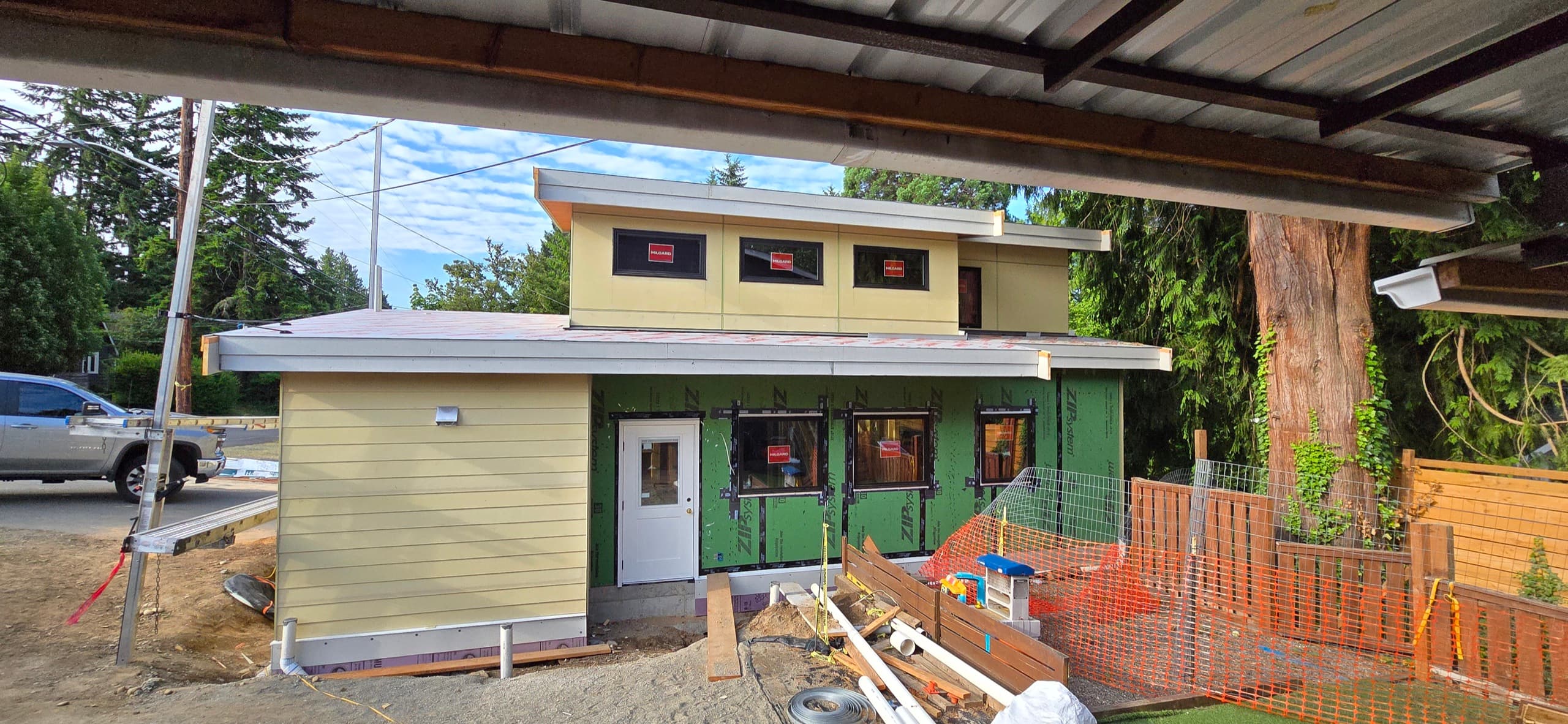
This is the invisible core of the job. An ADU moves through erosion control, excavation, foundation, under-slab plumbing, framing, roofing, windows, rough mechanical, electrical and plumbing, insulation, drywall, finishes, exterior, and landscape — each depending on the one before. The GC schedules every trade, orders materials to land when they are needed, and reorganises the whole sequence when a delivery slips or an inspection fails.
Whether those trades are the GC's own crew or subcontractors matters more on a small building than a large one. Handoffs between separate companies are where small jobs lose weeks. We self-perform thirteen trades for exactly that reason — see our services.
Inspections
Every phase above has an inspection gate, and work cannot continue past it until an inspector signs off. The GC books each one, is on site to meet it, and fixes whatever is flagged. In most of Washington the electrical inspection comes from a different agency than the building inspection, which is one more calendar to run. The full list is in every inspection your build goes through.
Money, paperwork and risk
- Holds the contractor registration, bond and liability insurance that make the work legal — verifiable in the Washington L&I registry.
- Carries or arranges builder’s risk cover for the structure while it is going up.
- Pays and manages every trade and supplier, so you have one invoice relationship, not fifteen.
- Issues and prices change orders in writing before the work, not after.
- Keeps the permit, inspection and lien-release records that your lender, insurer and eventual buyer will ask for.
Communication
The underrated part. You should know, every week, what happened, what is next and whether the number or the date moved. On an owner-led build the person telling you is the person who was on site. That is the main practical difference between an owner-operator and a firm where a salesperson hands you to a project manager you have never met.
Handover
Final inspections, the certificate of occupancy, the utility finals, the walkthrough, the punch list, the warranty and the documents. The job is finished when you have keys and a file, not when the last trade leaves.
What this means when you are hiring
Judge a GC on the invisible half. Ask who submits the permit and handles corrections, who is on site day to day, which trades are in-house, how change orders are priced, and what the estimate leaves out. Checklist in how to choose an ADU contractor. Or send us your address and we'll start at feasibility, which is where the job actually begins.