Can a Tree Stop Your DADU? Seattle's Tree Protection Rules
By Eric Dexter, Owner & Builder ·
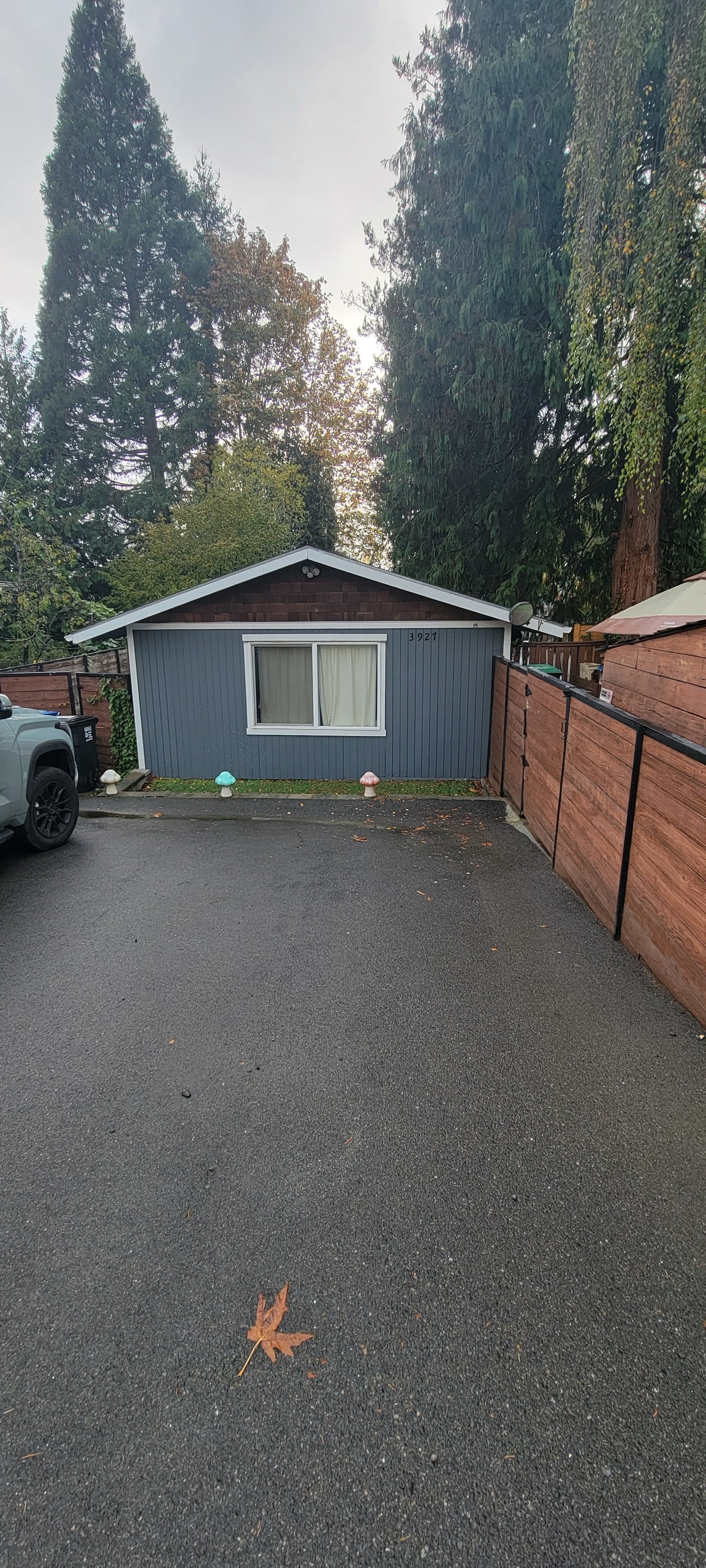
A big tree in the backyard almost never kills a DADU project outright. What it does is decide where the cottage goes, and sometimes how big it can be. Seattle's tree code protects a defined circle of ground around a regulated tree, that circle comes out of your buildable area, and the design has to work around what's left.
The rules changed twice recently — a full rewrite in 2023 and a set of amendments that took effect January 21, 2026 as part of the permanent Neighborhood Residential update. Most of what you'll find online, and several of the City's own older tip sheets, still describe the old version. Here is how it actually works now.
Forget “exceptional trees” — it's a tier system now
The 2023 ordinance replaced the old exceptional / non-exceptional split with four tiers, measured by diameter at standard height (DSH) — trunk diameter 4.5 feet above the ground. Which tier your tree falls into determines everything that follows.
- Tier 1 — a designated heritage tree. Cannot be removed, development or not, except as a genuine hazard.
- Tier 2 — any tree 24 inches DSH or larger, every tree in a tree grove (eight or more trees 12 inches or larger with a continuous canopy), plus a list of species protected at smaller sizes. Removable for development only if you can pass a specific test.
- Tier 3 — 12 inches up to 24 inches. May be removed as part of a development permit, but must be replaced.
- Tier 4 — 6 inches up to 12 inches. May be removed as part of a development permit, with no replacement required.
- Under 6 inches DSH — not regulated, unless it was a required replacement tree on an earlier approved permit.
That species list is the part homeowners get wrong most often. A Director's Rule protects a long list of trees as Tier 2 well below 24 inches — madrona, Pacific dogwood, Oregon white oak, Sitka spruce, Pacific yew, black hawthorn and shore pine at 6 inches or so; Japanese maple, vine maple, quaking aspen and Pacific crabapple in the 8 to 12 inch range; paper birch and honey locust at 20 inches. A 10-inch madrona is a Tier 2 tree. A 20-inch red alder or black cottonwood never is, at any size.
The tree protection area is the number that matters
Each retained Tier 1, 2 or 3 tree gets a tree protection area — a circle with a radius of one foot for every inch of trunk diameter. A 30-inch Douglas fir carries a 30-foot radius: roughly 2,800 square feet of your lot, which on a 5,000 square foot Seattle lot is more than half of it. Excavation and construction activity inside that circle are prohibited unless SDCI pre-authorizes them.
The circle can be reshaped, but not casually. A certified arborist can propose a modified protection area based on species tolerance, the tree's size, age and health, and the soils — but it can't exceed the feeder root zone, no new encroachment may come closer than half the protection radius, and the outer half can't be reduced by more than 35 percent unless the arborist can show an alternative method that protects the tree at least as well. Fencing and signage go up per the City's standard detail and stay up through construction.
What the January 2026 amendments changed
The 2026 update tightened the arithmetic in a way that helps some lots and hurts others. The old “basic tree protection area” was deleted, so one protection area now does both jobs — deciding whether a Tier 2 tree may come out and protecting a retained tree during construction. In Neighborhood Residential zones, protection areas and any sliver of lot less than 10 feet wide between a protection area and a setback are not counted as buildable area. And when there are several trees, the analysis uses the sum of all their protection areas, not one tree at a time — including the parts of a neighbor's tree's protection area that land on your lot.
When a Tier 2 tree can actually come out
In Neighborhood Residential zones a Tier 2 tree may be removed for development only if one of three things is true:
- The maximum lot coverage the zone allows cannot be achieved without building into the tree protection area.
- Avoiding the protection area would leave a portion of the house — or of an accessory dwelling unit — less than 10 feet wide.
- Removal is necessary to build the structure, required vehicle or pedestrian access, utilities, a retaining wall the City requires, or similar improvements.
The second one is written to name ADUs specifically, and the 2026 update lowered that threshold from 15 feet to 10 feet. It is the test most backyard cottage projects turn on: if working around the tree squeezes the unit below 10 feet wide anywhere, that's a documented basis for removal. Even then, SDCI approves only the minimum number of trees needed — not every tree you'd rather not have.
Trees outside the footprint are the common disappointment. A Tier 2 tree at the far corner of the yard, whose protection area doesn't stop you from reaching allowable coverage or force the unit below 10 feet, generally stays. Tier 3 and Tier 4 trees anywhere on the lot can go with the permit.
What you get for keeping the tree
Seattle pays you in envelope for retaining a big tree, and this is where a good design gets its advantage:
- A structure may extend into the front or rear setback as needed to protect a tree, limited to an area equal to the protection area of the trees that sit outside required setbacks. The old 50-percent-of-the-yard cap on that extension is gone.
- Required amenity area can be reduced by an area equal to the protection area of retained trees — and no amenity area at all is required for development that retains a Tier 2 tree.
- Height goes from 32 feet to 42 feet on a lot that retains a Tier 1 or Tier 2 tree.
- Multi-unit projects get density and floor-area bonuses for retaining a Tier 1 tree or two Tier 2 trees.
Those are real trades, not consolation prizes. Ten extra feet of height on a lot where coverage is the binding constraint can recover the square footage the tree cost you — vertically. Using them requires an arborist to review and approve the site plan, and a covenant recorded with King County that keeps development out of the protection area for the life of the building or the tree. That covenant runs with the land, so a future owner inherits it.
Replacement trees, and paying instead
Every Tier 1, 2 or 3 tree removed with development has to be replaced with enough new trees to produce, at maturity, roughly the canopy you took out. Species are limited to native and culturally significant, climate-resilient trees. Minimum sizes are set: 1.5-inch caliper for a single-trunk deciduous tree, three stems and six feet tall for multi-stem, four feet for an evergreen. You maintain and monitor them for five years with an 80 percent survival standard. Tier 4 trees need no replacement.
Where replanting on site isn't practical, the code allows a voluntary payment in lieu, paid before the permit authorizing removal is issued. The current Director's Rule sets it at $17.87 per square inch of trunk cross-section for Tier 1 and Tier 2 trees, with a flat $8,080 for any Tier 1 or 2 tree under 24 inches, and $2,833 per Tier 3 tree. Run the math on a 30-inch tree and the cross-section alone is about 707 square inches — on the order of $12,600. The City reviews those amounts periodically, so confirm the figure in effect when you apply. For each tree removed you pick one option: replant on site, replant off site, or pay.
Your neighbor's tree is your problem too
Off-site trees whose canopy or roots reach onto your lot have to be shown on every plan sheet, and their protection areas count in the analysis. You can't remove them, and you can't quietly damage them: the code's definition of tree removal includes filling, excavating, grading or trenching in a tree's drip line in a way that could cause irreversible damage. Trenching a new water line through a retained tree's root zone is, on paper, a removal.
Washington's timber trespass statute stacks on top of that: cutting, girdling or otherwise injuring a tree on someone else's land without authority exposes you to treble damages, reduced to single damages only if the trespass was casual or involuntary. State case law does give a landowner a self-help right to trim branches and roots that encroach over the line — but that civil right doesn't override Seattle's code, which independently regulates cutting live roots two inches or larger and requires a registered provider and public notice to do it. A tree standing on the property line is worse: it's co-owned, and trimming it in a way you know will kill it is timber trespass.
Street trees are a different department entirely
A tree in the planting strip or the unopened right-of-way is SDOT's, not SDCI's. Planting, removing or major pruning needs a Street Use permit, the City's stated policy is to retain street trees wherever possible, and removal is allowed only for hazard, poor health, or a construction conflict that can't be designed around. You post notice on site for 14 days for public comment, and removed street trees must be replaced. Storing material or fill inside a street tree's drip line is prohibited — which matters when your only staging area is the parking strip. If you aren't certain whether a tree is yours or the City's, confirm it with SDOT before you draw anything.
Do not pre-clear the lot
This is the most expensive mistake in this whole subject. Removing a regulated tree without authorization carries a civil penalty based on the tree's appraised value plus a 50 percent increase — and the penalty may be trebled where the removal was willful. The City's valuation rule expressly treats cutting within six months before submitting a building permit or development proposal, so as to avoid the tree regulations as willful. Cutting to improve views, or within six months of a sale closing, counts too.
On a mature conifer the arithmetic gets serious quickly, and a restoration plan is required on top of the penalty. SDCI also will not issue a development permit on a site with an unresolved tree violation — so a quiet weekend with a chainsaw can stop the DADU it was meant to enable. Separately, only a provider on the City's tree service provider registry may do commercial tree work, notice has to be posted online several business days before removal, and unregistered providers face their own penalties.
Where tree review lands in a real project
- Feasibility: inventory every tree 6 inches and up on the lot and on neighboring lots where canopy or roots cross the line. Check the City GIS map for critical areas, and confirm right-of-way trees with SDOT.
- Bring in a certified arborist from the registry to set protection areas and, if needed, propose modifications and write the tree protection report SDCI may require.
- Design the unit around the arborist-verified protection areas, using the setback extension if it helps. If any Tier 2 removal is needed, document the coverage or 10-foot-width test.
- Tree review happens inside the construction permit for the DADU — there is no separate tree permit for development-related removal.
- Before issuance: record the covenant if you used a setback modification, and pay any in-lieu amount.
- Before tree work: registered provider posts notice; protection fencing goes up before any demolition or grading.
- After: plant replacements, maintain them five years, keep the photo record.
SDCI will sell you an early answer, and on a treed lot it is usually worth it — a paid land use analysis or opinion letter can confirm protection areas and removal math before you spend money on design.
Outside Seattle, the rules are not the same
Every city on this side of the water writes its own tree code, and the approaches genuinely differ:
- Bellevue regulates significant trees at 6 inches and up and handles retention through a tree-credit system, where a detached ADU counts as a dwelling unit for the credit rate and an attached one does not.
- Kirkland regulates trees at 6 inches, treats 26 inches and up as landmark trees, and requires 50 tree credits per acre — with code language saying retention will not be required in a way that precludes building an ADU.
- Redmond requires 35 percent of significant trees to be retained and does not allow landmark trees (over 30 inches) to be removed without a granted exception.
- Bothell exempts existing single-family lots of 20,000 square feet or less from tree retention entirely.
- Lynnwood handles removal on a developed single-family lot under 16,000 square feet through a Class I permit, capped per calendar year.
Everett and Monroe have no private-lot retention requirement we could confirm for single-family property outside critical areas — which is not the same as no rules, so verify with the city before assuming. If your lot is outside Seattle, start with ADU rules by county and city.
The honest summary
A protected tree changes a DADU project; it rarely ends one. The projects that go badly are the ones where the tree gets discovered after the design is finished — where a 30-foot protection radius lands on a foundation already drawn. The projects that go well treat the tree as a site condition on day one, the same as an alley or a slope, and use the height and setback flexibility the code offers for keeping it.
Codes change, and the version that governs your build is the one in effect when you apply. Confirm current standards with SDCI, and read how big a DADU can be in Seattle for the rest of the envelope math and site work, drainage and excavation for the other site conditions that move a budget. Then send us the address through the contact form — we'll tell you which trees on your lot are regulated, what that leaves you to build in, and what it costs. The DADU permit process explains what approval involves once the design is set.