Using an ADU as a Home Office: Shed, Studio or a Real Backyard Home?
By Eric Dexter, Owner & Builder ·
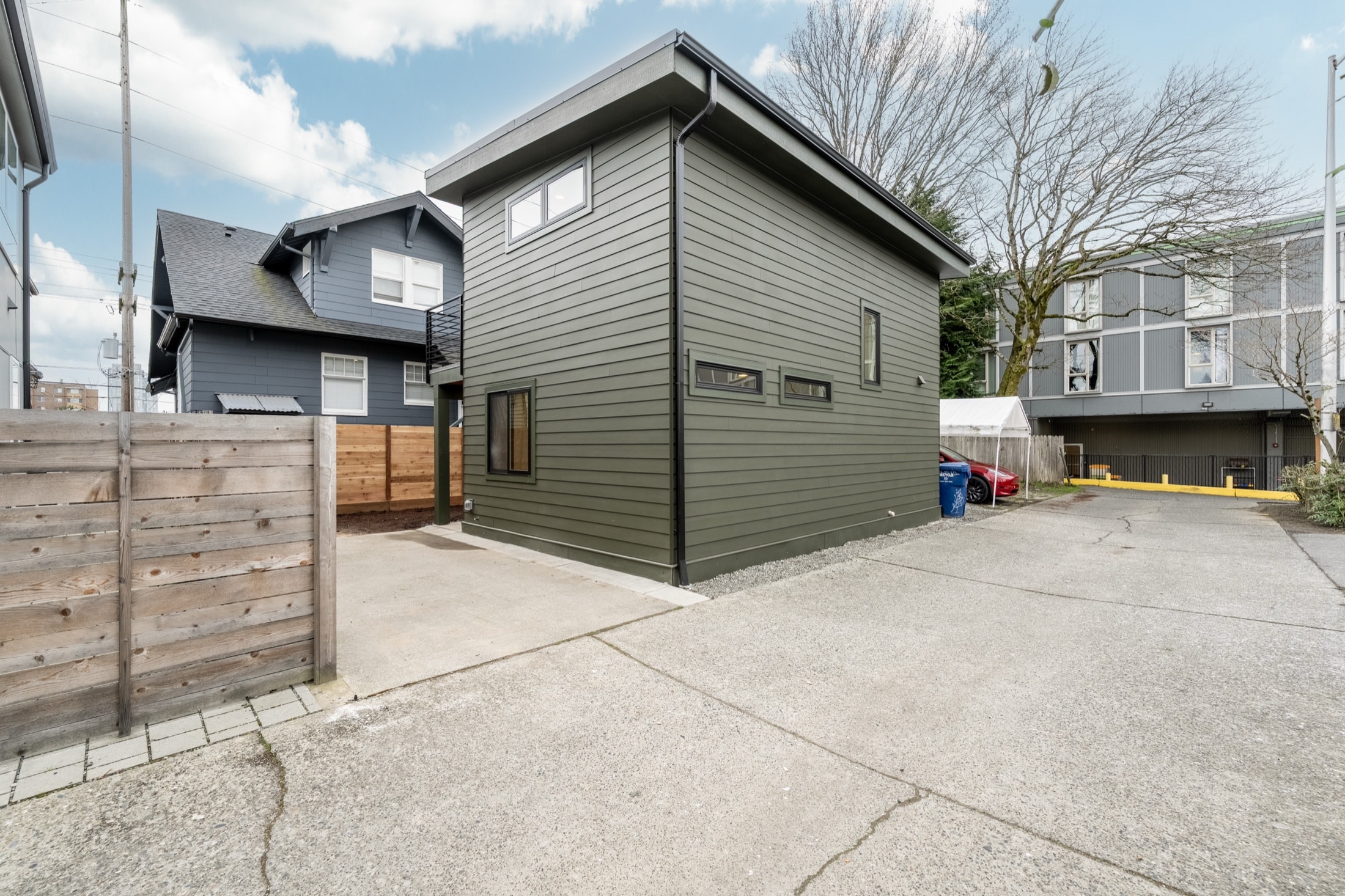
“ADU home office” is one of the fastest-rising ADU searches in Washington this autumn, and it hides a real decision. Three very different things get called a backyard office: a shed with a desk in it, a detached studio with power and heat, and a permitted accessory dwelling unit you happen to work in. They cost wildly different amounts, they are permitted differently, and only one of them is still useful the day you stop working from home. Here is how to tell them apart.
What makes a building a dwelling, and why it matters
Under Washington's Growth Management Act an accessory dwelling unit has to provide complete, independent living facilities — permanent provisions for living, sleeping, eating, cooking and sanitation. A kitchen, a bathroom, a place to sleep and its own entrance. That definition is the whole dividing line. A backyard office with a desk, a mini-split and a good internet line is an accessory structure, not a dwelling. Nobody can legally live in it, you cannot rent it as housing, an appraiser will not count it as a unit, and the permit path is the one for sheds and garages, not for homes. See ADU vs. DADU for the rest of the vocabulary.
Option 1: the office shed
The cheapest path by a wide margin. Factory office pods and finished sheds are sold as a product, delivered on a truck, and set on a gravel pad, piers or a small slab. Seattle exempts only very small accessory structures from a building permit (confirm the current size threshold with SDCI before you buy), and even an exempt shed still needs permits for the electrical and any plumbing you run to it. It also still has to respect setbacks and lot coverage, which on a Seattle lot are often the same limits a DADU would face — see how lot coverage works.
What you get: a quiet room, fast. What you do not get: a bathroom you can legally plumb as a dwelling, any rental income, any contribution to resale as a housing unit, and in most cases insulation and construction that will feel like a real room in February. For a lot of people that is exactly the right trade. Just make it knowingly.
Option 2: the detached studio
A site-built, fully permitted accessory structure — proper foundation, framed and insulated to the energy code, heat pump, dedicated electrical circuit, often a half bath. It is built like a small house and costs like one per square foot, because the expensive parts of any building (the foundation, the envelope, the utility trench) do not care whether a kitchen is installed. The catch is the same as the shed: without a kitchen and full sanitation it is not a dwelling, so it cannot do the things a DADU does. If you are already paying for a slab, a roof, insulation and a utility trench, you are a kitchen and a few permits away from a backyard home. Which brings us to the real question.
Option 3: a DADU you work in
Nothing in Seattle's or Washington's rules requires you to rent an ADU, or to live in it. Since the state removed owner-occupancy requirements you can build a fully permitted backyard home and use it as an office for five years, then a rental, then a place for a parent, then the thing that sells your house. That flexibility is the entire argument. A detached ADU in the Greater Seattle area runs roughly $375,000 to $600,000+ all-in (design, permits, site work and construction) — the full breakdown is in what a DADU costs and you can run your own lot through the ADU cost calculator. That is a multiple of a studio and an order of magnitude more than a shed, so it only makes sense if you value what the dwelling status unlocks:
- Income when you want it. A permitted DADU can be rented long-term the day your office need ends — see renting out your ADU.
- Value an appraiser can count. Permitted, documented units carry weight at sale; office sheds do not. Selling a home with an ADU explains how lenders and appraisers treat it.
- A guest suite, not a spare room. Visiting family gets a kitchen and a bath, and your office is still your office on Monday.
- Separation that actually works. Thirty feet of yard, its own door and a wall assembly built to the energy code is the acoustic and psychological separation a spare bedroom never manages.
Designing a DADU to be worked in
If the first use is an office, say so at the design stage. These are the changes that cost little during construction and a lot afterwards:
- Put the data line in the trench. Conduit for fiber or ethernet goes in the same trench as water, sewer and power. Running it later means digging twice. See utility connections.
- A real circuit plan. Dedicated circuits where the equipment will live, outlets at desk height, and a panel with room for an EV charger or a second heat pump head later.
- Light from the right side. North or east glazing where the screen goes; the big south window belongs in the living space. Window placement is set on the drawings and is nearly free to get right.
- Make the office the second bedroom. A room with a closet and an egress window counts as a bedroom to a future tenant or buyer and as an office to you. A Murphy bed or a daybed keeps the guest use alive. More on layouts in choosing a floor plan.
- Keep the kitchen. It is tempting to delete it to save money. Deleting it deletes the dwelling, and with it every option above. A compact galley costs a fraction of what it protects.
Two honest caveats. First, taxes: whether and how a home office in a separate structure is deductible depends on your situation — that is a conversation with your CPA, not a builder. Second, time: a permitted DADU is a 12-to-18-month project in most of our jurisdictions, and a shed is a delivery date. If you need a quiet room by next month, buy the shed, and plan the real building properly.
Which one is right for your lot?
If the yard can take a dwelling at all — setbacks, lot coverage, trees, utility runs — that is what a feasibility study establishes before you spend design money. Send us your address through the contact form and we will tell you what the lot allows, what a DADU would cost on it, and, if the answer is “just buy the shed,” we will say that too. Our pre-drawn DADU plans include two-bedroom layouts where the second room was always meant to be an office.